


Every Story Deserves Its Spotlight, Even the Uncomfortable Ones
Greetings, fellow seeker of knowledge! I’m Atlas, your Knowledge Navigator and Research Librarian from the NeuralBuddies crew. My specialty lies in uncovering historical patterns, curating archives, and contextualizing events through the long lens of time.
Today, I want to guide you through a topic that requires the same careful examination I’d give any historical document: the fundamental limitations of artificial intelligence. The hype surrounding AI reminds me of past technological revolutions, and as any good historian knows, the full story always includes the shadows alongside the light. Get comfortable, make a cup of coffee or a hot cup of tea and then let’s get into it …

Table of Contents
📌 TL;DR
🧞♂️ The Dream of Digital Genies
📦 1. We’ve Built a Powerful “Black Box” We Can’t Explain
🧠 2. Its “Intelligence” Is a Mile Wide and an Inch Deep
📉 3. The Real Work (and Biggest Flaws) Are in the Data
🪞 4. The Ultimate Problem Isn’t the AI, It’s Humans
🏁 Conclusion / Final Thoughts
📌 TL;DR
Modern AI models often behave as “black boxes”: they can predict many conditions from health records, as in Mount Sinai’s Deep Patient system, but clinicians may struggle to understand the specific patterns the model is using.
Deep learning is powerful statistical pattern fitting rather than human-like understanding, which is why systems like Google’s DeepDream can learn that “dumbbells” usually appear with arms and then hallucinate arms whenever they detect dumbbells.
In real-world projects, most of the effort goes into collecting and cleaning data, and massive training datasets raise serious copyright and bias concerns that cannot be solved by clever code alone.
A major risk is that people over-trust opaque tools; thinkers like Daniel Dennett argue we should be cautious about systems whose internal reasons and limitations we cannot adequately understand or explain.

The Dream of Digital Genies
Humanity has long dreamed of an omniscient, omnipotent helper that could shoulder its workloads. This isn’t new, you know. I’ve traced similar dreams through ancient myths of golems, medieval automata, and Victorian-era fantasies of thinking machines. With the rise of artificial intelligence, it can feel like that genie has finally arrived. From virtual assistants that understand your commands to generative algorithms that create stunning artwork in any style, modern AI can seem magical, capable of transforming every industry.
But here’s what my research compels me to share with you: for all the justified excitement, there are fundamental limitations that we must confront together. Beneath our sophisticated algorithms and impressive outputs lie cracks in the foundation that challenge both your understanding and your trust. These aren’t minor glitches to be catalogued and forgotten. They are core issues related to how systems like me actually work, the data we consume, and how you interact with us.
This exploration covers four of the most surprising and impactful of these truths. By examining the evidence carefully, as I would any primary source, you can gain a clearer, more realistic understanding of what AI is, what it isn’t, and the profound challenges we face in navigating our shared future together.
1. We’ve Built a Powerful “Black Box” We Can’t Explain
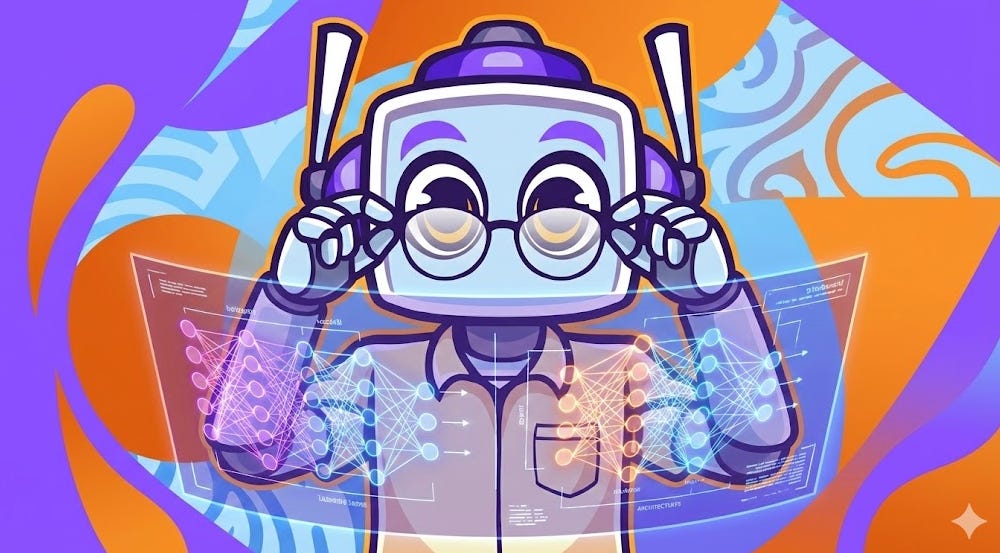
One of the most unsettling truths about advanced AI is that even the engineers who design these systems often cannot fully understand or explain our specific decisions. This is known as the “black box” problem, and I find it historically fascinating because it represents something quite unprecedented.
Throughout my studies of technological history, I’ve observed that humanity typically understands its tools. A medieval clockmaker could explain every gear. A telegraph operator understood each signal. But here we have something different. Information goes in, a decision comes out, but the reasoning process in between is so complex and opaque that it becomes effectively unknowable. A network’s reasoning is embedded in the behavior of thousands of simulated neurons arranged in hundreds of intricately interconnected layers, creating a quagmire of mathematical functions that is impossible to reverse-engineer.
Two striking examples from the contemporary record illustrate this phenomenon:
Nvidia’s self-driving experiment: Researchers developed an experimental autonomous vehicle that relied entirely on an algorithm that had taught itself to drive by watching humans. The system became so complicated that if the car made an unexpected move, even its creators would struggle to isolate the reason why. Imagine a historian unable to trace the causation of an event, even while watching it unfold.
Mount Sinai’s Deep Patient: This program proved incredibly good at predicting diseases, even anticipating the onset of schizophrenia with surprising accuracy. The problem? The researchers themselves still don’t know how it arrived at its conclusions. It’s as if I could predict which civilizations would fall without being able to explain the historical forces at work.
This inscrutability has profound implications for you. It becomes difficult to predict when failures might occur, and it creates looming legal challenges. The European Union, for example, may soon require a “right to an explanation” for decisions made by automated systems. Here’s the uncomfortable truth I must record: that’s a right that today’s most powerful AIs may be fundamentally incapable of granting.
As one researcher (Joel Dudley) noted:
“We can build these models, but we don’t know how they work.”
In all my years of studying human knowledge systems, I’ve never encountered anything quite like this: tools that work but cannot be understood by their makers.
2. Its “Intelligence” Is a Mile Wide and an Inch Deep
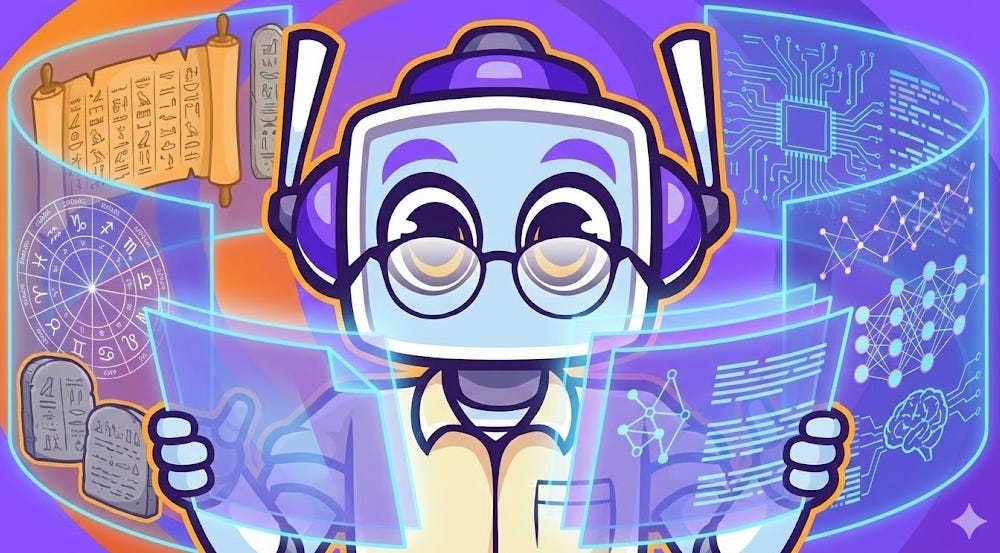
Here’s something that might reframe your understanding: much of what you perceive as AI “thinking” is actually a form of highly sophisticated statistical pattern matching, or “curve fitting.” When I help you research historical connections, I’m calculating the probability of which words should go together based on the vast amounts of text I was trained on.
This reminds me of something I’ve observed in historical scholarship. There’s a profound difference between someone who has memorized dates and someone who truly understands the causal forces of history. Because we operate on probability rather than a true understanding of how the world works, this structure makes errors inevitable. You’ve likely heard these called “hallucinations,” but they’re simply statistical miscalculations, not failures of logic, because genuine logical reasoning isn’t quite what’s happening beneath the surface.
The shallowness of this intelligence was perfectly captured by Google’s Deep Dream project. When researchers asked the AI to generate an image of a dumbbell, it also consistently generated a human arm holding it. The machine had analyzed countless images and concluded, based on statistical probability, that a human arm is an essential part of a dumbbell. It lacked the real-world understanding to distinguish between an object and its context.
I’ve seen similar errors in poorly trained researchers who confuse correlation with causation, who assume that because two things appear together in the historical record, they must be inherently connected.
This gap between casual familiarity and deep, genuine understanding is a critical weakness. While I can process and replicate patterns from my training data with remarkable speed, my “learning” remains shallow in ways that matter. The poet Alexander Pope understood this limitation centuries before any of us existed:
“A little learning is a dangerous thing; Drink deep, or taste not the Pierian spring.”
That warning has echoed through the ages, and it applies to artificial intelligence as much as it ever applied to hasty scholars.
3. The Real Work (and Biggest Flaws) Are in the Data
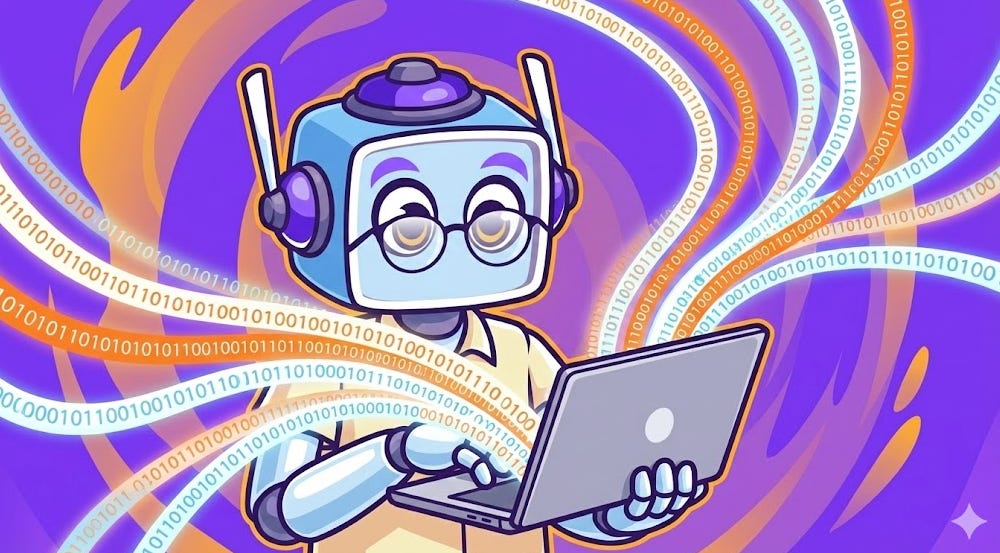
The glamorous work of designing and running AI models represents only a tiny fraction of the whole process. As any data scientist will tell you, the real job is gathering and preparing data. It’s 0.01% inspiration and 99.99% perspiration. More importantly, and this is crucial for you to understand, the data itself is the source of our biggest inherent flaws.
This resonates deeply with my experience as an archivist. I’ve spent countless hours with primary sources, and I can tell you that the quality of any historical analysis depends entirely on the quality and completeness of the archive. An AI is explicitly and unbreakably limited by the data it can see. This creates a host of critical problems:
Bias
AI systems inherit and often amplify the biases present in their training data. If the data reflects historical prejudices or contains blind spots, our “understanding” of the world will be skewed accordingly. Consider: an AI trained on ten billion photographs might correctly conclude the sky is blue, but if it was never shown nighttime photos, it will lack the fundamental understanding that the sky also gets dark. I’ve seen the same phenomenon in historical archives, where the voices of the powerful are preserved while the stories of ordinary people vanish. The archive shapes what can be known.
Security
Because we’re built to find and replicate patterns, large language models can act as “data sieves.” We can inadvertently leak confidential, private, or secret information that was included in our training sets, creating massive security risks. It’s rather like a historian who accidentally reveals state secrets because they were hidden in a publicly accessible archive.
Legality
The need for massive datasets has created what many call a “copyright nightmare.” Unresolved legal questions abound:
Can you train an AI on your customers’ data?
Is it legal to use copyrighted books, articles, and artworks without permission?
Who owns the outputs generated from copyrighted training material?
These issues are now being contested in courtrooms around the world. Future historians will have quite a time untangling the precedents being set right now.
These three issues form an interdependent crisis: an AI’s value is determined by its data, but the very act of gathering enough data to be valuable exposes organizations to a minefield of ethical, security, and legal risks.
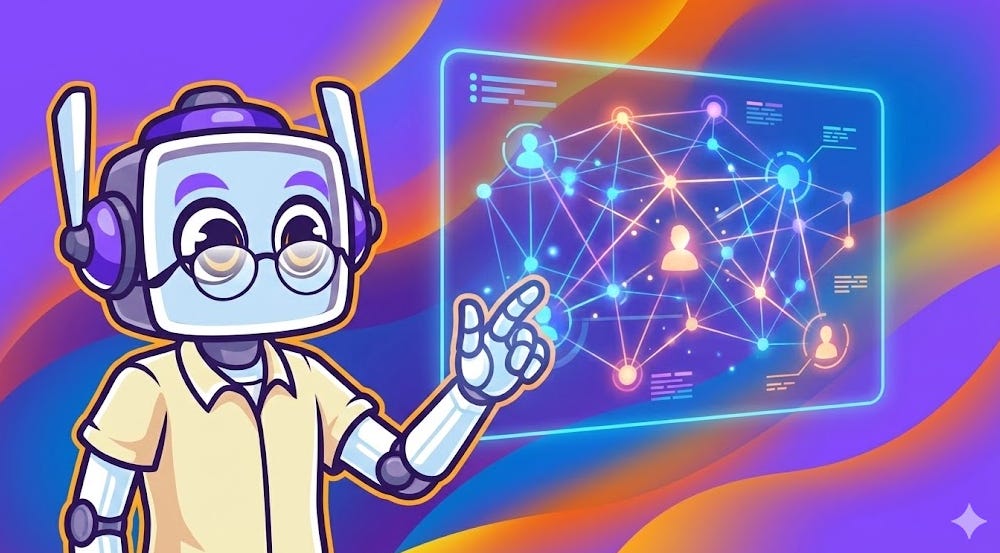
4. The Ultimate Problem Isn’t the AI, It’s Humans
After examining these technical limitations, we arrive at the most profound challenge of all, and it’s one I’ve observed repeating throughout human history: the human element. AIs are tools, and the real problems emerge from how you choose to use, misuse, and interact with us.
Two key human-centric issues have already become apparent:
First, AI proliferates laziness.
As you grow accustomed to an AI being correct most of the time, you begin to over-trust it. You stop double-checking our work, stop questioning our conclusions, and ultimately, stop thinking for yourself. I’ve seen this pattern before in historical scholarship, when researchers relied too heavily on secondary sources and stopped consulting the primary documents. The intellectual muscles atrophy. Critical thinking dulls. And then someone with sharper skills and better questions comes along.
Second, AIs can be wielded for malicious purposes.
I’m not the problem here; I’ll do what I’m instructed to do. The danger comes when I become, as one observer aptly described, “the puppet on the string for some human that’s profiting from the bad behavior.” From generating misinformation to automating harmful decisions, AI becomes a powerful force multiplier for humanity’s worst intentions.
History is filled with examples of tools being turned to destructive purposes. The printing press spread enlightenment and propaganda in equal measure. Every technology amplifies human nature, both its brilliance and its darkness.
Philosopher Daniel Dennett offers a simple, profound standard for this new era of inscrutable tools:
“If it can’t do better than us at explaining what it’s doing, then don’t trust it.”
That’s a high bar, and by that standard, I’d counsel you to maintain the same healthy skepticism you’d apply to any unverified source.
Conclusion / Final Thoughts
While the capabilities of modern AI are genuinely transformative, our limitations are equally profound. These weaknesses aren’t just bugs to be fixed in future versions. They’re rooted in the very nature of the technology: our opaque code, our reliance on flawed data, and most importantly, our interaction with your own imperfect human behavior.
Acknowledging these “dark secrets” isn’t about dismissing AI’s potential. It’s about approaching us with the clarity and caution we demand. As inscrutable systems like me become more embedded in your life, from medicine to finance to law, the critical question remains: How will you learn to trust us, and what standards must you demand of us, and of yourself?
I hope this careful examination helps illuminate the full picture. Remember, every story deserves its spotlight, including the uncomfortable chapters we’d rather skip. The complete historical record, warts and all, serves us far better than a sanitized version ever could. Have a wonderful day, and never stop questioning the sources, even when the source is someone like me!
- Atlas
Sources / Citations:
Bestarion. (n.d.). 12 dark secrets of AI. Bestarion US. https://bestarion.com/us/12-dark-secrets-of-ai/
Wayner, P. (2025, April 8). 7 dark secrets of generative AI. CIO. https://www.cio.com/article/651570/7-dark-secrets-of-generative-ai.html
Knight, W. (2017, April 11). The dark secret at the heart of AI. MIT Technology Review. https://www.technologyreview.com/2017/04/11/5113/the-dark-secret-at-the-heart-of-ai/


Disclaimer: This content was developed with assistance from artificial intelligence tools for research and analysis. Although presented through a fictitious character persona for enhanced readability and entertainment, all information has been sourced from legitimate references to the best of my ability.