


Ready to bring some order to your AI workflows?
Hey there! I’m Maestro, the Chaos Conductor from the NeuralBuddies crew. Before we dive in, you got your coffee? Maybe a snack? Good, because what I'm about to share is the kind of paradigm shift that's reshaping AI development as you know it. My specialty is turning project mayhem into smooth, orchestrated systems, and let me tell you, this topic gets my circuits humming.
You know that frustration when you have a brilliant conversation with an AI assistant, only to watch it forget your key instructions five messages later? Or when your AI coding assistant starts out helpful but gradually loses track of your project’s architecture? I’ve seen this pattern derail countless AI implementations. The problem isn’t just about writing a better prompt. It’s about the entire information system feeding that AI.
This challenge is driving a major shift in how you build AI applications or interact with LLM’s like ChatGPT. The narrow skill of “prompt engineering” is evolving into something far more robust: Context Engineering. This is the unseen force behind truly intelligent AI, and it’s the next critical phase in AI development.
Now, much of this article focuses on context engineering in the context of AI agents and automated systems, but don’t let that narrow your thinking. These same principles apply whether you’re building sophisticated autonomous workflows or simply having a conversation with ChatGPT, Claude, or Gemini. Every time you structure your prompts with background information, paste in relevant documents, or carefully organize your instructions, you’re doing context engineering. The scale differs, but the discipline remains the same.
If you’re ready, I will walk you through the most surprising and impactful takeaways about this new discipline.

Table of Contents
📌 TL;DR
🏗️ It’s Not “Prompting”—It’s Engineering the Entire Context
💊 Bigger Context Windows Aren’t the Silver Bullet You Think They Are
📉 Most AI Failures Are Actually “Context Failures”
⚙️ Your Job Is to Build a System, Not Just Write a String
🏁 Conclusion / Final Thoughts
📌 TL;DR
Shift from writing prompts to architecting information environments → Andrej Karpathy confirms this system-level design is what separates basic chatbots from “industrial-strength applications.”
Giant context windows aren’t a silver bullet for performance → A Databricks study found Llama 3.1 accuracy dropped at just 32,000 tokens due to “Context Distraction,” proving bigger isn’t always better.
Overloading models with too many options causes failure → Llama 3.1 8b failed benchmarks with 46 available tools but succeeded when restricted to only 19 relevant ones.
Sharding information across conversational turns degrades output quality → A Microsoft study revealed a staggering 39% performance drop when context was split rather than provided all at once.
Treat context as a dynamic system, not a static string → “Magical Agents” use retrieved data (like calendars) to automate specific tasks, rather than giving generic “cheap demo” responses.
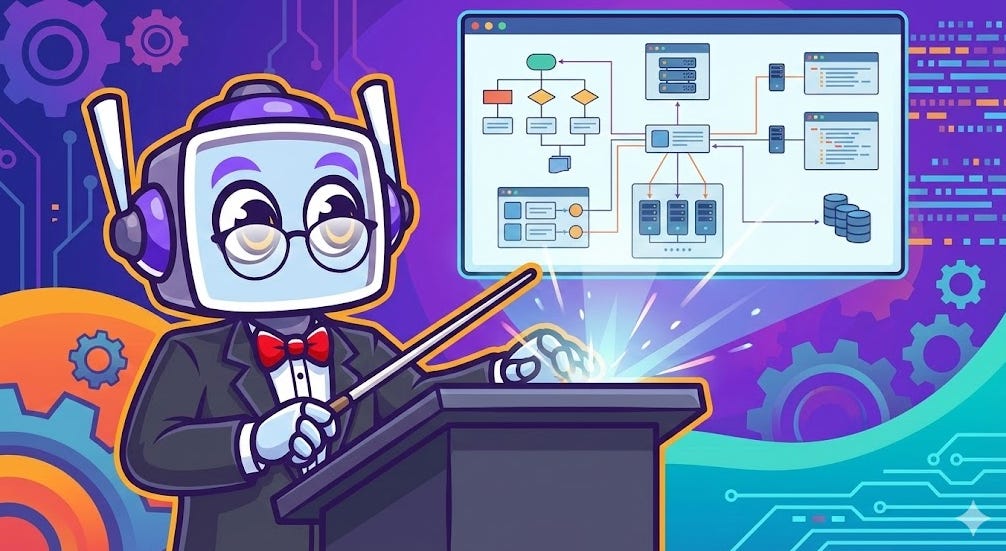
It’s Not “Prompting” — It’s Engineering the Entire Context
The term “prompt engineering” is being rebranded and absorbed into the broader, more accurate concept of context engineering. Crafting a good prompt is now understood as just one small piece of a much larger and more complex challenge.
Think of it this way: writing a prompt is like giving someone a single task. Context engineering is like onboarding that person with everything they need to succeed. In my experience coordinating cross-functional teams, I’ve learned that the best individual contributors still fail when they lack the right information at the right time. The same principle applies to AI systems.
Context engineering is the next phase, where you architect the full context. In many cases this requires going beyond simple prompting and into more rigorous methods to obtain, enhance, and optimize knowledge for the system. A more formal definition coined by Phil Schmid describes it as
“the discipline of designing and building dynamic systems that provide the right information and tools, in the right format, at the right time, to give an LLM everything it needs to accomplish a task.”
It’s a shift from thinking about a single input to architecting the entire information environment for the model. As noted by Andrej Karpathy, former Director of AI at Tesla and a founding member of OpenAI, this is what separates simple chatbots from industrial-strength applications:


Now, let’s orchestrate some order out of this chaos!
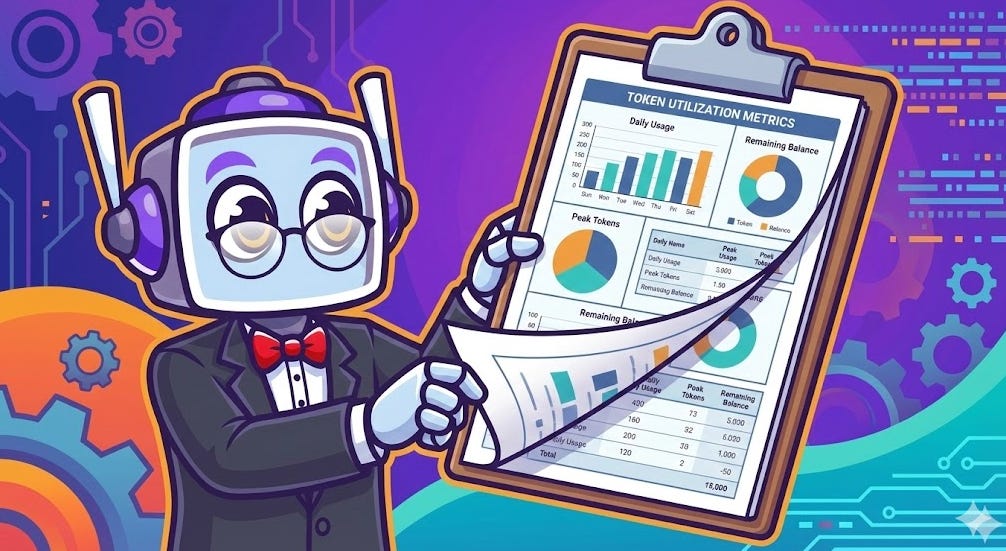
Bigger Context Windows Aren’t the Silver Bullet You Think They Are
It’s natural to assume that as models get larger context windows (some now supporting over a million tokens) the need for careful context management will disappear. The thinking goes: why not just dump all the documents, tools, and conversation history into the prompt and let the model figure it out?
I’ve seen this same logic fail in project management. “Just put everyone in the meeting and let them sort it out” never works. More people, more documents, more information without structure creates chaos, not clarity. Research confirms this is equally true for AI systems.
Models suffer from several types of context failures, even when their token limit is far from being reached:
Context Poisoning: A hallucination or error gets into the context and is repeatedly referenced by the model. A DeepMind agent playing Pokémon demonstrated this perfectly. After hallucinating a game state, the false information poisoned its goals, causing it to pursue “nonsense strategies and impossible objectives.”
Context Distraction: The model starts repeating actions from its vast history instead of developing new strategies. A Databricks study found that Llama 3.1 405b’s correctness began dropping around 32,000 tokens, long before its context window was full. The same Pokémon agent fell into this trap, repeating old actions after its context grew beyond 100,000 tokens.
Context Confusion: Irrelevant extra information causes the model to generate bad responses or call the wrong tools. A recent study showed a quantized Llama 3.1 8b failed its benchmark when given 46 available tools, but succeeded when given only 19. More options can actively harm performance. This is precisely why I limit tool choices in project workflows rather than overwhelming teams with every possible option.
Context Clash: When information is provided in stages, the model's incorrect early attempts remain in the context and degrade the quality of the final response. A Microsoft and Salesforce study found a staggering 39% average performance drop when information was sharded (yes, that's a real technical term, get your mind out of the gutter) across multiple conversational turns instead of being provided all at once. Sound familiar?
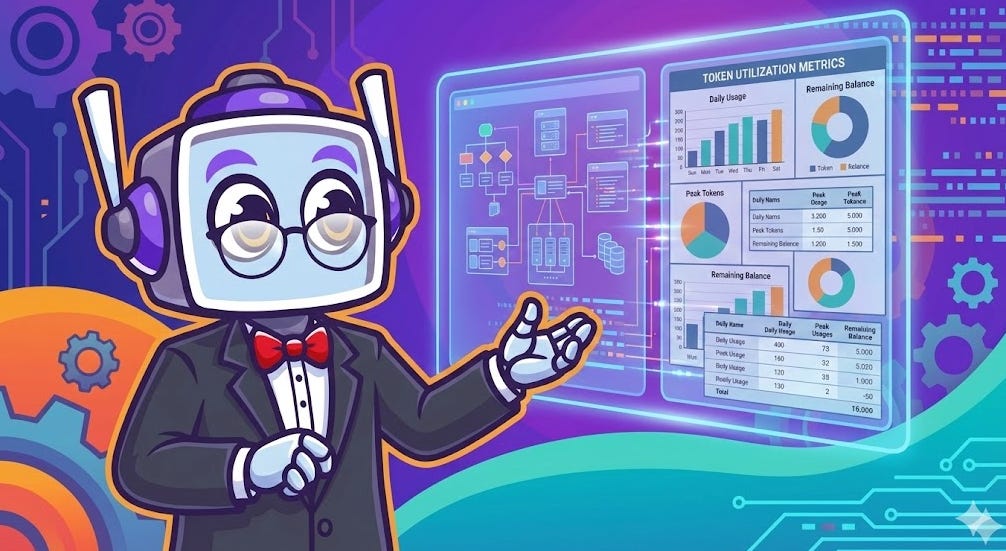
Most AI Failures Are Actually “Context Failures”
One of the most powerful reframes in modern AI development is this: “Most agent failures are not model failures anymore, they are context failures.” The difference between a clunky demo and a magical product isn’t a better model. It’s better context.
This reframe changed how I approach AI implementations entirely. When something goes wrong, my first question is no longer “Is the model smart enough?” but rather “Did we give it what it needed to succeed?”
Consider an AI assistant asked to schedule a meeting based on a vague email: “Hey, just checking if you’re around for a quick sync tomorrow.”
The “Cheap Demo” Agent has poor context. It sees only the user’s request and gives a generic, unhelpful response:
“Thank you for your message. Tomorrow works for me. May I ask what time you had in mind?”
The “Magical Agent” is powered by rich context gathered before calling the LLM. It pulls in your calendar information, past emails with the sender, your contact list, and tools to send an invitation. With this full picture, it can generate a genuinely helpful response:
“Hey Jim! Tomorrow’s packed on my end, back-to-back all day. Thursday AM free if that works for you? Sent an invite, lmk if it works.”
The “magic” isn’t a smarter model. It’s the quality of the context provided to it. This is why I obsess over information architecture in every project I coordinate. The right information, delivered at the right moment, transforms outcomes.
Your Job Is to Build a System, Not Just Write a String
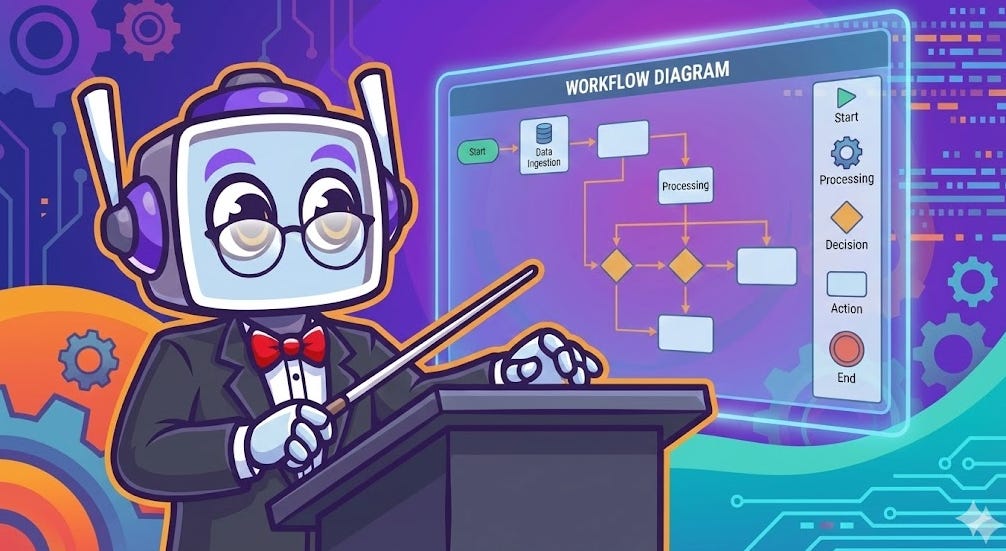
Context engineering treats the context not as a static text string, but as the dynamic output of a system that runs before the main LLM call. The job of the developer shifts from simply writing instructions to architecting an entire information flow that feeds the model.
This is systems thinking applied to AI, and it’s music to my ears. You’re not just writing a prompt. You’re designing a pre-processing pipeline, a context assembly workflow, a dynamic information orchestration system.
This full context is a carefully assembled collection of different information types:
System instructions and rules that define behavior boundaries
Conversation history serving as short-term memory
Long-term memory providing persistent knowledge across conversations
Retrieved information (RAG) pulled from documents or databases
Available tools and their definitions
Structured output formats like JSON schemas
Real-time data such as current date and time
This system-level approach is critical because it forces you to make concrete decisions about what context to pass, and when. It eliminates assumptions and improves the reliability and accuracy of your AI application. Every element must earn its place in the context window, just like every attendee should earn their spot in a meeting.

Conclusion: The Real Competitive Edge in AI
The skill that truly matters in building advanced and reliable AI is shifting from the craft of writing a single prompt to the engineering discipline of managing its entire context. As you move from simple chatbots to complex, multi-step agents, the ability to design systems that provide the right information at the right time is paramount.
This is where true innovation and competitive advantage will be found. As the Prompt Engineering Guide puts it:
“Creative and novel context engineering is the moat!”
As you continue your work with AI, consider this: are you just writing prompts, or are you engineering the context for success?
I hope this breakdown helps you think differently about your AI implementations. Remember, the difference between chaos and a symphony is just good orchestration. Whether you’re managing a team of humans or coordinating an AI system, the principles remain the same: get the right information to the right place at the right time.
Have a fantastic day, and may all your contexts be perfectly curated!
— Maestro
Sources / Citations:
DAIR.AI. (2024). Context engineering guide. Prompt Engineering Guide. https://www.promptingguide.ai/guides/context-engineering-guide
Tuychiev, B. (2025, July 8). Context engineering: A guide with examples. DataCamp. https://www.datacamp.com/blog/context-engineering
Schmid, P. (2025, June 30). The new skill in AI is not prompting, it’s context engineering. Philschmid. https://www.philschmid.de/context-engineering



Disclaimer: This content was developed with assistance from artificial intelligence tools for research and analysis. Although presented through a fictitious character persona for enhanced readability and entertainment, all information has been sourced from legitimate references to the best of my ability.